Dieser Blogbeitrag ist Teil der Reihe #RollKRIT (Rollenspiele zum Kampf gegen Rechtsextremismus durch Förderung von Inklusion und Toleranz). english below

Teil 7 – Eat the Reich

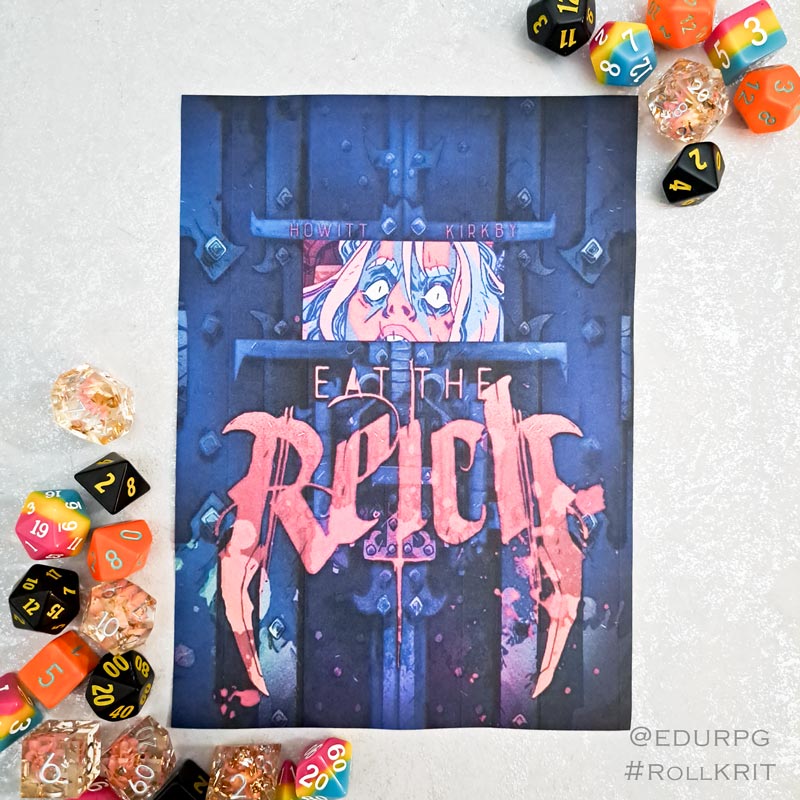
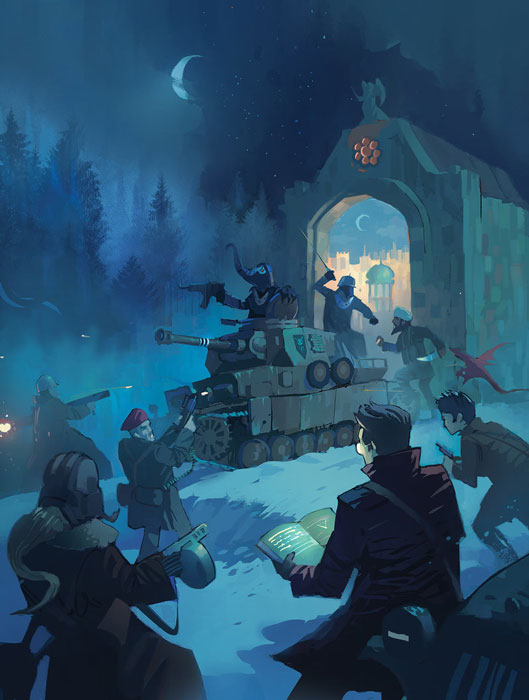
Eat the Reich ist wild, blutig und provokativ. Es geht in diesem TTRPG nicht um nüchterne Aufarbeitung, sondern um groteske Rachephantasien. Die Spielenden schlüpfen dabei in die Rollen untoter Partisanen, die sich buchstäblich durch Nazi-Deutschland fressen. Es ist Splatter mit politischer Botschaft, eine bewusste Überschreitung der Grenze zwischen Satire und Schock.

Antifaschismus als Satire

Für viele ist eine solch explizite Gewalt abstoßend, die Darstellung zu reißerisch, zu exzessiv. Doch genau das ist Teil des Konzepts von Grant Howitt, dem Autor des Spiels. Eat the Reich folgt einer Tradition der antifaschistischen Exploitation, die sich schon in Filmen wie Inglourious Basterds zeigte. Das Spiel treibt dieses Motiv noch auf die Spitze. Helden sind hier anarchische Vampire und das TTRPG lässt keinen Interpretationsspielraum: Faschismus ist nicht verhandelbar, sondern etwas, das ausgerottet werden muss. Indem Nazis nicht nur als Gegner, sondern als Futter für blutrünstige Kreaturen dargestellt werden, nimmt das Spiel ihnen Macht und verkehrt die faschistischen Ideologien einer Überlegenheit in ihr Gegenteil.

Satire ist ein oft genutztes Mittel, um Machtstrukturen bloßzustellen. Gerade in der Popkultur gibt es etliche Beispiele, in der die Darstellung von totalitären Regimen noch bewusst überzeichnet wird, um Reflexion über den Faschismus anzuregen. Von Chaplins Der große Diktator bis zu modernen Satiren wie Jojo Rabbit werden Humor und groteske Elemente genutzt, um Ideologien zu dekonstruieren. Eat the Reich folgt diesem Muster, indem es den Nationalsozialismus nicht nur als historisches Grauen, sondern als ultimativen Feind einer anarchischen, antiautoritären Kreatur darstellt. Die Vampire verkörpern das Gegenteil der faschistischen Ordnung: Sie sind chaotisch, unkontrollierbar und unsterblich.

Chancen …

Die Frage ist, ob sich ein solch extremes Spiel überhaupt für die Bildung eignen kann. Für ein breites Publikum ist die Ästhetik zweifellos zu drastisch, für historisch ungebildete Spielende könnte sie sogar zu problematischen Missverständnissen führen. Doch für die Arbeit mit jungen, medienkompetenten Erwachsenen könnte Eat the Reich in Einzelfällen möglicherweise spannend sein. Es könnte mit der richtigen Anleitung als Ausgangspunkt für Diskussionen über Feindbilder, Propaganda und die Inszenierung von Geschichte dienen. Die Spielenden könnten reflektieren, warum Nazis in der Popkultur oft als überzeichnete Schurken dargestellt werden und welche Risiken diese Vereinfachung birgt. Eat the Reich könnte gerade wegen seiner übertriebenen Gewaltdarstellung sogar zur Reflexion genutzt werden, um über alternative Wege des Widerstands gegen Extremismus zu sprechen – nicht über physische, sondern über politische, soziale und kulturelle Strategien.

… und viele Risiken

Eat the Reich ist jedoch auf keinen Fall ein Spiel für den Standard-Geschichtsunterricht. Seine Nutzung in einem Bildungskontext sollte ausschließlich mit sorgsam ausgewählten Zielgruppen und mit angemessener Vor- und Nachbereitung stattfinden. Und das auch nur in einem Kontext, der die Sensibilität des Themas respektiert – idealerweise unter der Moderation eines sachkundigen Pädagogen. Für jüngere Zielgruppen oder formale Bildungskontexte ist Eat the Reich definitiv nicht geeignet.

Verantwortungsbewusst spielen

Um Fehlinterpretationen oder eine Verharmlosung des Themas zu vermeiden, sollte mindestens beachtet werden:

  • Vor dem Spiel: Eine Einführung in das historische Setting und die Intention des Spiels, um Missverständnisse zu verhindern.
  • Nach dem Spiel: Debriefing und Reflexionsrunden, um die Erfahrungen zu verarbeiten und in den größeren Kontext einzubetten.
  • Während des Spiels: Triggerwarnungen und Sicherheitsmechanismen sind unbedingt als notwendige Werkzeuge für respektvollen Umgang und schützende Spielkultur zu nutzen.

Howitt selbst hat seinem Spiel die folgenden Inhalts-Warnungen vorangestellt: „Dieses Spiel enthält Tod, Gewalt, schwere Verletzungen an Spielercharakteren und Nicht-Spieler-Charakteren, Blut, Vampirismus, mentale Beherrschung, Schusswaffen, animierte Leichen, Werwölfe, okkulte Magie, Faschismus, Nazis und Adolf Hitler.“

Erhältlichkeit

Eat the Reich ist direkt bei seinem Verlag „Rowan, Rook and Decard“ erhältlich.

https://rowanrookanddecard.com/product/eat-the-reich/?v=5f02f0889301

Ebenso ist es bei den meisten deutschen Rollenspielhändlern zu bestellen – allerdings existiert es bislang nur in englischer Sprache.

Auszeichnungen

Eat the Reich hat 2024 Gold ENNIE Awards in den folgenden Bereichen gewonnen:

  • Best Cover
  • Best Art – Interior
  • Best Adventure – Short Form

Es war außerdem für die Auszeichnung „Product of the Year“ nominiert.

This Blog Post is Part of the #RollKrit Series („Roll Dice to Knockdown Radicalism with Inklusion & Tolerance“).

Part 7 – Eat the Reich

Eat the Reich is wild, bloody, and provocative.This TTRPG is not about sober historical analysis but rather grotesque revenge fantasies. Players take on the roles of undead partisans who literally eat their way through Nazi Germany. It is splatter with a political message, a deliberate transgression of the boundary between satire and shock.

Antifascism as Satire

For many, such explicit violence is repulsive, the portrayal too sensationalist, too excessive. But that is precisely part of Grant Howitt’s concept, the game’s author. Eat the Reich follows a tradition of antifascist exploitation, seen in films like Inglourious Basterds. The game takes this to the extreme. Here, the heroes are anarchic vampires, and the game leaves no room for interpretation: fascism is non-negotiable; it must be eradicated. By depicting Nazis not just as enemies but as food for bloodthirsty creatures, the game strips them of power and turns fascist ideologies of superiority on their head.

Satire is a frequently used tool to expose power structures. In pop culture, there are many examples where totalitarian regimes are deliberately exaggerated to provoke reflection on fascism. From Chaplin’s The Great Dictator to modern satires like Jojo Rabbit, humor and grotesque elements are used to deconstruct ideologies. Eat the Reich follows this pattern by portraying National Socialism not just as a historical horror but as the ultimate enemy of an anarchic, anti-authoritarian creature. The vampires embody the opposite of fascist order: they are chaotic, uncontrollable, and immortal.

Opportunities…

The question is whether such an extreme game can be used for educational purposes at all. For a broad audience, the aesthetic is undoubtedly too drastic; for historically uninformed players, it could even lead to problematic misunderstandings. However, for working with young, media-literate adults, Eat the Reich could potentially be an interesting case study. With proper guidance, it could serve as a starting point for discussions about enemy images, propaganda, and the portrayal of history. Players could reflect on why Nazis are often depicted as exaggerated villains in pop culture and what risks this simplification entails. Eat the Reich, precisely because of its excessive depiction of violence, could even encourage reflection on alternative ways of resisting extremism – not through physical means but through political, social, and cultural strategies.

…and many Risks

However, Eat the Reich is by no means a game suited for standard history lessons. Its use in an educational context should only take place with carefully selected target groups and with appropriate preparation and follow-up. And even then, only in a setting that respects the sensitivity of the topic – ideally under the guidance of a knowledgeable educator. For younger audiences or formal educational contexts, Eat the Reich is definitely not suitable.

Playing Responsibly

To avoid misinterpretations or trivializing the subject matter, the following should be considered at a minimum:

  • Before the game: An introduction to the historical setting and the game’s intention to prevent misunderstandings.
  • After the game: Debriefing and reflection sessions to process experiences and place them in a broader context.
  • During the game: Trigger warnings and safety mechanisms must be used as necessary tools for a respectful and protective gaming culture.

Howitt himself has included the following content warnings in his game: „This game includes: death, violence, grievous injury to player characters and non-player characters, blood, vampirism, mental domination, guns, animated corpses, werewolves, occult magic, fascism, nazis, and Adolf Hitler.“

Availability

Eat the Reich is available directly from its publisher, „Rowan, Rook and Decard.“

It can also be ordered from most role-playing game retailers.

Awards

In 2024, Eat the Reich won Gold ENNIE Awards in the following categories: Best Cover, Best Art – Interior, and Best Adventure – Short Form. It was also nominated for Product of the Year.
Dieser Blogbeitrag ist Teil der Reihe #RollKrit (Rollenspiele zum Kampf gegen Rechtsextremismus durch Förderung von Inklusion und Toleranz). english below

Teil 6 – Achtung! Cthulhu

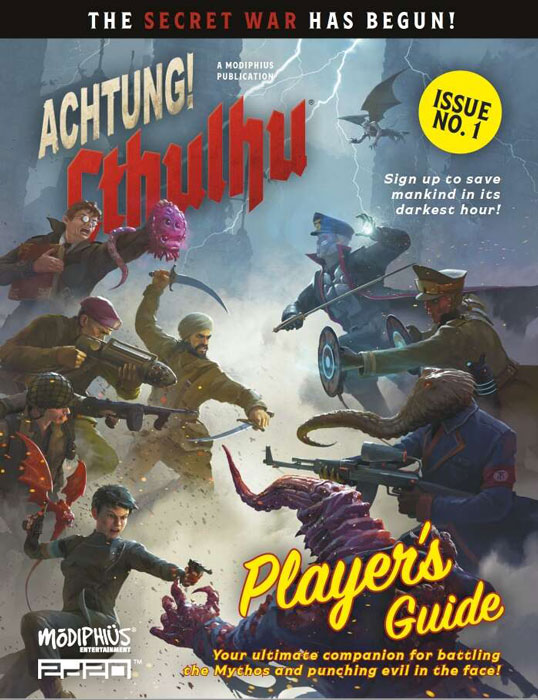
Das von Modiphius Entertainment herausgegebene Rollenspiel Achtung! Cthulhu nimmt in der Reihe über Rollenspiele zum Kampf gegen Rechtsextremismus eine recht brachiale Position ein. Es lässt die Spielenden nicht nur auf die Grauen des Nationalsozialismus im Zweiten Weltkrieg treffen, sondern fügt noch ein weiteres furchteinflößendes Thema zum Setting hinzu: Den kosmischen Horror von mächtigen, uralten Wesen des Cthulhu-Mythos.

Das wirft bezüglich unserer Absicht der Förderung von Inklusion und Toleranz zum Kampf gegen Rechtsextremismus natürlich die Frage auf, ob dieses Rollenspiel-Setting überhaupt Möglichkeiten der ernsthaften Auseinandersetzung mit den Schrecken des Faschismus erlaubt.

Spielmechaniken zwischen Horror und Pulp

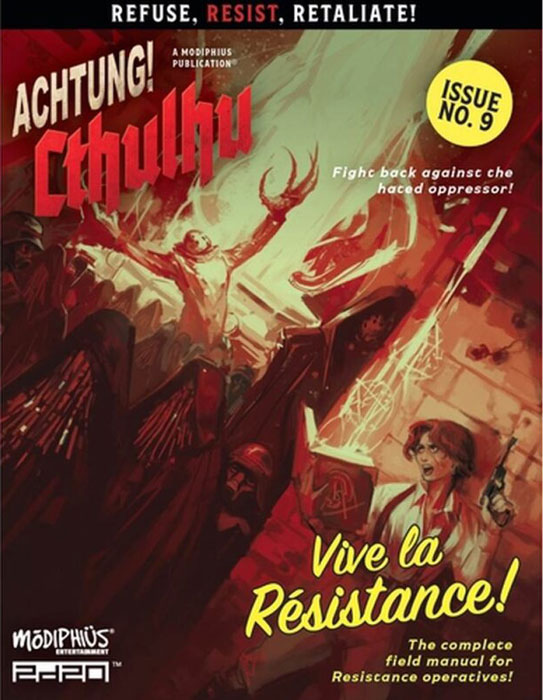
Werfen wir zunächst einen Blick auf die Spielmechanik: Ursprünglich als Erweiterung für das Call of Cthulhu-Rollenspiel gedacht, entwickelte sich Achtung! Cthulhu rasch zu einem eigenständigen Spiel. Es wurde bereits auf Basis der Regelwerke von BRP, FATE und Savage Worlds veröffentlicht. 2021 kam es dann in seiner aktuellen Auflage im 2D20-Regelwerk von Modiphius heraus und fokussiert darin sowohl auf taktische als auch erzählerische Aspekte. Die Spieler übernehmen meist die Rollen von Angehörigen und Unterstützenden der alliierten Streitkräfte. Der Quellenband Vive la Résistance ermöglicht es darüber hinaus auch Angehörige des europäischen Widerstands gegen die Nationalsozialisten zu spielen.

Im 2D20-System können Spielende durch Momentum-Punkte das Narrativ aktiv mitgestalten, während eine Threat-Ressource der Spielleitung Werkzeuge an die Hand gibt, problematische Lagen noch schwieriger werden zu lassen. Das lässt das Spiel dynamisch und actionreich erscheinen. Zudem wird das Empfinden einer existenziellen Hoffnungslosigkeit anderer Cthulhu-Systeme etwas reduziert. Mit der Nutzung von Momentum und Threat geht jedoch auch die Notwendigkeit eines Ressourcenmanagements einher, was das Erleben von Immersion bei unerfahrenen Gruppen einschränken kann.

Der 2. Weltkrieg als Setting

Man muss diesem Spielsystem und seinem Setting zunächst zugutehalten, dass es ihm erstaunlich gut gelingt, Elemente von subtilem Horror und actionreichem Pulp zu verbinden. Es gleitet dabei nicht ins Lächerliche ab und nutzt auch keine SC mit quasi superheldenhaften Fähigkeiten, um den überbordenden Gefahren zu begegnen. Stattdessen wird die Spielwelt detailliert beschrieben und orientiert sich dabei ebenso a cthulhuidem Mythos, wie an historischen Ereignissen im Zweiten Weltkrieg. Es obliegt somit der Spielleitung, den Fokus des Spiels auf historische Mythen, auf historische Ereignisse oder auf Geschichten von H.P. Lovecraft zum Cthulhu-Mythos zu legen.

Ein Rollenspiel, das den Nationalsozialismus im 2. Weltkrieg explizit als Setting wählt, birgt jedoch unweigerlich Chancen und Risiken. Einerseits bietet Achtung! Cthulhu die Gelegenheit, sich kritisch mit faschistischen Strukturen auseinanderzusetzen. Spielende erleben über ihre SC die Grausamkeit eines totalitären Regimes und können Mechanismen von Propaganda, Unterdrückung und Widerstand hautnah nachempfinden. Diese Erfahrung kann helfen, historische Parallelen zu heutigen Entwicklungen zu ziehen.

Gleichzeitig besteht jedoch die Gefahr einer Banalisierung. Indem Nazi-Schergen mit cthulhoidem Horror vermischt werden, könnten die realen Verbrechen der Nationalsozialisten hinter dem erfundenen Schrecken des Mythos verblassen. Der Faschismus könnte als bloßes narratives Element für pulpige Abenteuer gesehen werden.

Rahmung und Reflexion notwendig

Eine sehr verantwortungsbewusste Herangehensweise der Spielleitung erscheint daher absolut essenziell, um die pädagogische Nutzung des Achtung! Cthulhu Spielsystems auch nur in Betracht zu ziehen. Das Spiel sollte in einem Bildungskontext unbedingt in einer Weise geleitet werden, dass historische Genauigkeit gewahrt und die moralische Tragweite der Thematik betont wird. Dies bedingt eine erfahrene Spielleitung und letztlich auch Spielende mit einem grundlegenden Vorwissen. Eine Vorbereitung durch Wissensvermittlung über reale historische Hintergründe und ihre Konsequenzen, sowie ausreichende Zeit für begleitende Reflexionsphasen sind dazu ebenso unabdingbar, wie die Nutzung von geeigneten Sicherheitstools für das Spielerleben.

Erhältlichkeit

Eine deutsche Fassung des Spiels (der eine frühere Ausgabe im Savage Worlds Spielsystem zugrunde liegt) erschien beim Uhrwerk-Verlag.
Dort wird es jedoch seit 2021 nicht mehr fortgeführt, da der Originalverlag des Spiels (Modiphius) Achtung! Cthulhu für sein 2D20-System weiterentwickelt hat und es in der aktuellen Auflage in diesem System selbst (englischsprachig) vertreibt.

Aufgrund seiner Popularität ist diese aktuelle 2D20 Fassung auch über zahlreiche andere Rollenspielgeschäfte (in englischer Sprache) in Deutschland erhältlich.

This Blog Post is Part of the #RollKrit Series („Roll Dice to Knockdown Radicalism with Inclusion & Tolerance“).

Part 6 – Achtung! Cthulhu

The role-playing game Achtung! Cthulhu, published by Modiphius Entertainment, takes a rather forceful stance in the series on role-playing games that engage against extremism. It not only confronts players with the horrors of National Socialism during World War II but also adds another terrifying element to the setting: the cosmic horror of powerful, ancient beings from the Cthulhu Mythos. This naturally raises the question, whether this role-playing game setting even allows for a serious engagement with themes like extremism, radicalism and fascism.

Game Mechanics Between Horror and Pulp

Let’s first take a look at the game mechanics: Originally conceived as an expansion for the Call of Cthulhu role-playing game, Achtung! Cthulhu quickly evolved into a standalone game. It has been published using the BRP, FATE, and Savage Worlds rule systems. In 2021, its latest edition was released under Modiphius‘ 2D20 system, focusing on both tactical and narrative aspects. Players typically take on the roles of members and supporters of the Allied forces. The sourcebook Vive la Résistance also allows for the portrayal of members of the European resistance against the Nazis.

In the 2D20 system, players can actively shape the narrative using Momentum points, while a Threat resource gives the game master tools to escalate difficult situations. This makes the game feel dynamic and action-packed. Additionally, the sense of existential hopelessness often found in other Cthulhu-based systems is somewhat reduced. However, the use of Momentum and Threat also introduces a need for resource management, which may limit the immersive experience for less experienced RPG-groups.

World War II as a Setting

One must acknowledge that this game system and setting successfully blend elements of subtle horror with action-packed pulp. It does not descend into absurdity, nor does it feature player characters with near-superhuman abilities to counter overwhelming dangers. Instead, the game world is described in detail, drawing equally from the Cthulhu Mythos and historical events of World War II. It is ultimately up to the game master to decide whether to focus on historical myths, real historical events, or stories from H.P. Lovecraft’s Cthulhu Mythos.

A role-playing game that explicitly chooses National Socialism in World War II as its setting inevitably presents both opportunities and risks. On the one hand, Achtung! Cthulhu offers the chance to critically engage with fascist structures. Players experience firsthand, through their characters, the cruelty of a totalitarian regime and can better understand the mechanisms of propaganda, oppression, and resistance. This experience can help draw historical parallels to present-day developments.

At the same time, however, there is a risk of trivialization. By blending Nazi henchmen with Cthulhu-esque horror, the real crimes of the National Socialists could fade behind the fictional terror of the Mythos. Fascism might be reduced to a mere narrative element for pulp-style adventures.

Framing and Reflection Are Necessary

A highly responsible approach by the game master is therefore absolutely essential if considering the educational use of the Achtung! Cthulhu game system. In an educational context, the game should be conducted in a way that maintains historical accuracy and emphasizes the moral significance of the subject matter. This requires an experienced game master and players with a foundational level of historical knowledge. Adequate preparation through the provision of historical background knowledge and its consequences, as well as sufficient time for accompanying reflection phases, are just as indispensable as the use of appropriate safety tools for player experiences.

Availability

The publisher of the game (Modiphius) distributes Achtung! Cthulhu in its current 2D20 system itself. Due to its popularity, however, this current 2D20 edition is also available through numerous other role-playing game stores.

Dieser Blogbeitrag ist Teil der Reihe #RollKRIT (Rollenspiele zum Kampf gegen Rechtsextremismus durch Förderung von Inklusion und Toleranz). english below

Teil 5 Going Rogue

In Teil 4 dieser Serie schrieb ich, dass Rebel Scum und thematisch ähnliche TTRPGs mit leichtgewichtigen Regelsystemen durchaus edukativ gezielt eingesetzt werden können, um etwa Aspekte wie Autoritarismus, Gruppenzwang und Zivilcourage zu thematisieren.

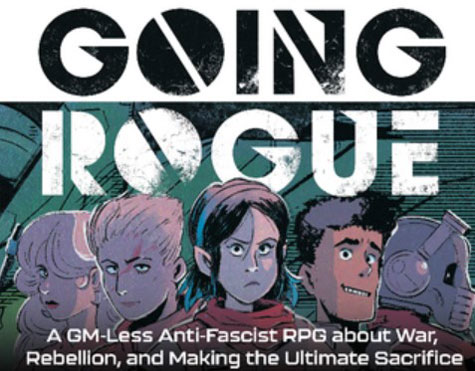
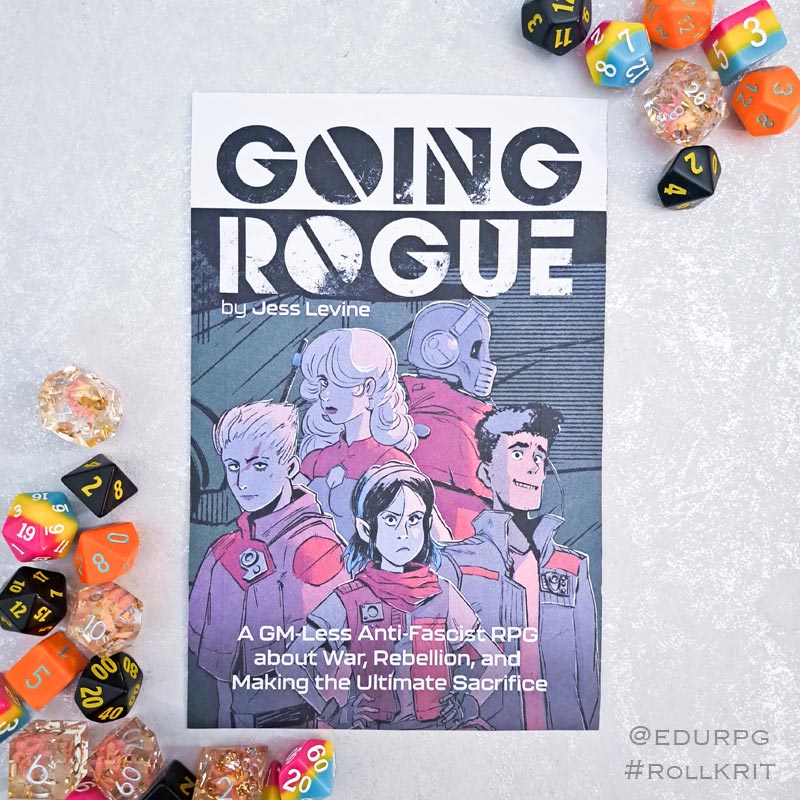
Going Rogue ist ein Beispiel für einen solchen thematisch ähnlichen Ansatz: Die Autorin Jess Levine nutzt dazu ebenfalls einen an das Star Wars Universum angelehnten Hintergrund für die Spielwelt und das resultierende Regelwerk ist mit gerade mal 34 Seiten sogar noch kürzer als Rebel Scum – die Spielsysteme der beiden TTRPGs unterscheidet sich dagegen deutlich. 

Belonging Outside Belonging

Going Rogue nutzt das Belonging Outside Belonging System. Es handelt sich dabei um einen kollaborativ-erzählerischen Ansatz für Tabletop-Rollenspiele, der auf Würfel und Zahlenwerte für Charakterfähigkeiten verzichtet. Er wurde ursprünglich von Avery Alder und Benjamin Rosenbaum für Dream Askew und Dream Apart entwickelt und ermöglicht eine Aufteilung der Spielleitungsfunktionen unter den Spielenden. Oft wird es als Spiel ohne Spielleitung bezeichnet – man kann es aber auch als ein Spiel beschreiben, bei dem jeder Spielende Aspekte der Spielleitung übernimmt. Im Verlauf des Spiels können Spielende etwa ihre Umgebung beschreiben, Nicht-Spieler-Charaktere darstellen und die Konsequenzen von Handlungen erzählen.

Token als Erzählressource

Dabei werden Token als eine Ressource zur Steuerung von starken und schwachen Moves genutzt. Alle SCs verfügen über eine Liste von starken Moves, die positive oder kontrollierte Aktionen darstellen, sowie von schwachen Moves, die riskant oder problematisch sind, den Spielenden aber einen Token zurückgeben. Mit anderen Worten: Um einen starken Move auszuführen, muss man einen Token ausgeben, den man zuvor durch einen schwachen Move verdient hat.

Dieses System ist optimiert, um Geschichten über Gemeinschaften am Rand der Gesellschaft zu erzählen. Die Spielcharaktere stehen dabei oft im Spannungsfeld zwischen Zugehörigkeit und Außenseitertum. Sie erzählen emotionale, soziale und persönliche Geschichten, die etwa in post-apokalyptischen Gemeinschaften (Dream Askew) oder jüdischen Fantasy-Welten (Dream Apart) spielen. Oder eben in diesem Fall in einem Setting, das an das Star Wars Universum angelehnt ist – wobei insbesondere Rogue One und Andor als Vorbilder genutzt wurden. Das Spiel legt den Fokus auf die oft unbeachteten Helden des Widerstands, die im Schatten agieren und immense Opfer bringen, um Tyrannei zu bekämpfen.

Rebel Scum oder Going Rogue

Während der Fokus bei Rebel Scum stärker auf einem schnellen, actionreichen Spielgefühl liegt, ermutigt die Mechanik von Going Rogue die Spielenden mit Hilfe der tokenbasierten Vorgehensweise, den Fokus auf eine gemeinsame narrative Gestaltung zu legen. Andererseits verlangen die ungewöhnlicheren Regelelemente von Going Rogue möglicherweise zunächst eine Eingewöhnungszeit, die nicht bei allen Spielgruppen gewünscht bzw. in allen pädagogischen Situationen möglich ist. Somit sprechen die Spiele unterschiedliche Spielstile, Vorlieben und Voraussetzungen an.

Die Autorin bezeichnet Going Rogue ausdrücklich als antifaschistisches Rollenspiel über Krieg, Rebellion und ultimative Aufopferung. Durch die immersive Erzählweise und die Betonung von Charakterentwicklung ermöglicht dieses TTRPG die Komplexität von moralischen Entscheidungen zu erleben. Wie zahlreiche andere TTRPGs kann es gezielt pädagogisch genutzt werden, um Empathie und kritisches Denken zu fördern, sowie dabei helfen, Mechanismen von Radikalisierung, Gruppenzwang und moralischer Entscheidungsfindung nachvollziehen. Es lohnt sich meiner Meinung nach sehr, das einmal selbst auszuprobieren.

Erhältlichkeit

Das Spiel ist z.B. bei itch.io und bei DrivethruRPG erhältlich.

This Blog Post is Part of the #RollKRIT Series („Roll Dice to Knockdown Radicalism with Inclusiveness & Tolerance“).

Part 4 Going Rogue

In Part 4 of this series, I wrote that Rebel Scum and thematically similar TTRPGs with lightweight rule systems can be deliberately used for educational purposes, for example, to address aspects such as authoritarianism, peer pressure, and civil courage.

Going Rogue is an example of such a thematically similar approach: Author Jess Levine also uses a setting inspired by the Star Wars universe for the game world, and the resulting rulebook, at just 34 pages, is even shorter than Rebel Scum. However, the game systems of the two TTRPGs differ significantly.

Belonging Outside Belonging

Going Rogue utilizes the Belonging Outside Belonging system. This is a collaborative, narrative-driven approach to tabletop role-playing games that forgoes dice and numerical character stats. Originally developed by Avery Alder and Benjamin Rosenbaum for Dream Askew and Dream Apart, it allows the distribution of game-mastering functions among the players. It is often described as a game without a game master – but it can also be seen as a game where each player takes on aspects of game mastering. Throughout the game, players can describe their surroundings, portray non-player characters, and narrate the consequences of actions.

Tokens as a Narrative Resource

Tokens are used as a resource to regulate strong and weak moves. All player characters (PCs) have a list of strong moves, which represent positive or controlled actions, as well as vulnerable moves, which are risky or problematic but reward the player with a token. In other words: To perform a strong move, a player must spend a token that they previously earned through a vulnerable move.

This system is optimized for telling stories about communities on the fringes of society. The player characters are often caught between belonging and being outsiders. They tell emotional, social, and personal stories, such as those set in post-apocalyptic communities (Dream Askew) or Jewish fantasy worlds (Dream Apart). In this case, the setting is inspired by the Star Wars universe, particularly taking Rogue One and Andor as its main influences. The game focuses on the often-overlooked heroes of the resistance who operate in the shadows and make immense sacrifices to fight tyranny.

Rebel Scum or Going Rogue

While Rebel Scum places more emphasis on a fast-paced, action-packed gaming experience, Going Rogue’s token-based mechanics encourage players to focus on collective narrative development. On the other hand, Going Rogue’s more unconventional rule elements may require an adjustment period, which may not be desirable or feasible for all gaming groups or educational settings. As a result, the two games cater to different play styles, preferences, and requirements.

The author explicitly describes Going Rogue as an anti-fascist role-playing game about war, rebellion, and ultimate sacrifice. Through its immersive storytelling and emphasis on character development, this TTRPG allows players to experience the complexity of moral decision-making. Like many other TTRPGs, it can be purposefully used in educational contexts to foster empathy and critical thinking, as well as to help players understand mechanisms of radicalization, peer pressure, and moral dilemmas. In my opinion, it is well worth trying out for yourself.

Availability

The game is available at itch.io and DrivethruRPG.

Dieser Blogbeitrag ist Teil der Reihe #RollKrit (Rollenspiele zum Kampf gegen Rechtsextremismus durch Förderung von Inklusion und Toleranz). english below

Teil 4 – Rebel Scum

Im Vergleich zu den bisher vorgestellten TTRPGs der Reihe #RollKRIT ist Rebel Scum ein unbekannteres Spiel mit einem oberflächlich gesehen eher unbeschwerten Zugang:
Bei den bereits skizzierten TTRPGs setzt Rosenstrasse als historisch präzises und emotional überaus intensives Erzählspiel auf das Miterleben des Grauens von Faschismus aus einer sehr persönlichen Perspektive. Grey Ranks vermittelt die Tragik des ebenfalls historischen betrachteten Widerstands durch eine Coming-of-Age-Perspektive, wobei es durch gezielt eingesetzte Mechaniken die Unausweichlichkeit folgenschwerer Entwicklungen für Handelnde im Widerstand vermittelt. Spire erlaubt den Spielenden dagegen, sich losgelöst von historischer Perspektive in einer düsteren Fantasywelt mit den moralischen Konsequenzen von Widerstand gegen ein Unterdrückungsregime auseinanderzusetzen.

Popkulturell gezeichnete Rebellion

Rebel Scum arbeitet weit stärker mit popkulturellen Metaphern und überzeichneten dystopischen Elementen, was den Einsatz in Bildungsprojekten niedrigschwelliger macht und dennoch erlaubt, die Auswirkungen totalitärer Regime zu thematisieren. Es basiert auf dem minimalistischen und sehr zugänglichen Polymorph-System von Chris O‘Neill, das stark auf narrativen Flow und intuitive Spielmechaniken setzt. Damit erlaubt es eine offene, selbst gestaltete Erzählweise mit vielen Freiheiten für die Spielenden.

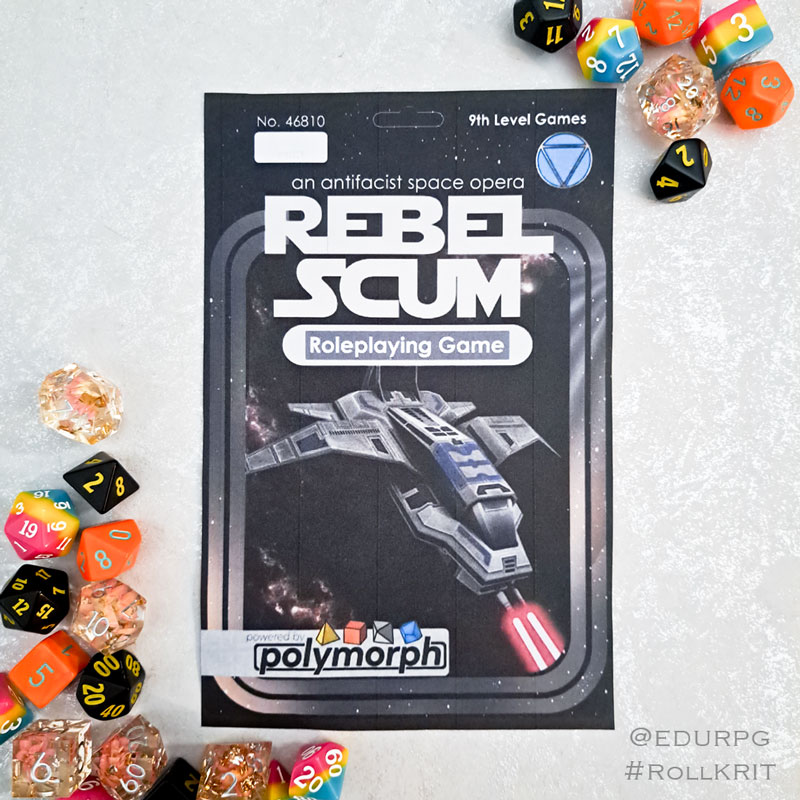
In dem dystopischen Science-Fiction Setting, regiert eine totalitäre Macht mit eiserner Hand und die Spielenden übernehmen die Rolle von Widerstandskämpfenden, die für Freiheit, Solidarität und Gerechtigkeit eintreten. Das 2021 mit Unterstützung eines Kickstarters publizierte Spiel lehnt sich dabei sehr deutlich an die Ästhetik von Star Wars an und bietet so ein popkulturell leichtes Onboarding – was es noch gezielt verstärkt, indem die SC in Form von Action-Spielzeug illustriert werden.

Zwischen Feel-Good-Abenteuer und kritischer Reflexion

O’Neill scheint der Spagat zwischen leichtgängigem Spiel und schwerer Thematik dabei durchaus bewusst zu sein. So schreibt er auf der itch.io Plattform des Spiels, Rebel Scum sei von der Liebe für eine gewisse Linie von 3 und 3/4 inch großen Actionfiguren inspiriert und spiele sich als schnelle „Feel good space opera of rebellion and adventure“. Im Kickstarter formulierte er zudem „Es ist erfrischend und heilsam, in einem Spiel Weltraum-Nazis ins Gesicht zu schlagen, während wir in einer Zeit leben, in der wir erneut dazu aufgerufen sind, gegen tatsächlichen Faschismus in der realen Welt zu kämpfen (und nicht nur in unseren Weltraumopern)“. Doch glücklicherweise geht die Nutzbarkeit des Spiels weit über eine oberflächlich erleichternde Gewaltphantasie hinaus. Denn in der gezielten Reflexion mit Pädagogen kann das Spielerlebnis auch eine tiefere Betrachtung über Autorität, Widerstand und Zivilcourage ermöglichen.

Rebel Scum kommt als schmales Büchlein mit sparsamen Regeln und eine etwas brachial-simplistischen Botschaft daher. Dennoch hat es das Potential, demokratische Grundwerte im Spiel erfahrbar zu machen, statt sich lediglich auf die oft abstrakte politische Aufklärung in Schulen zu verlassen. Dieses und ähnliche TTRPGs könnten in Workshops oder Schulprojekten gezielt eingesetzt werden, um Themen wie Autoritarismus, Gruppenzwang und Zivilcourage gemeinsam zu analysieren.

Die Spielenden finden leicht Anschluss an das zugrundeliegende Star-Wars-Narrativ, können dabei aber unmittelbar erleben, wie sich Propaganda, Angst und soziale Kontrolle auswirken – und auch, welche Kraft Solidarität und Widerstand haben können.

Erhältlichkeit

Das Spiel ist z.B. direkt bei 9th Level Games, bei itch.io und bei Sphärenmeisters Spiele erhältlich.

This Blog Post is Part of the #RollKrit Series („Roll Dice to Knockdown Radicalism with Inclusiveness & Tolerance“).

Part 4 Rebel Scum

Compared to the previously introduced TTRPGs in the #RollKRIT series, Rebel Scum is a lesser-known game with a seemingly lighthearted approach:

Rosenstrasse is a historically precise and deeply emotional storytelling game that allows players to experience the horrors of fascism from a highly personal perspective. Grey Ranks conveys the tragedy of historical resistance through a coming-of-age lens, using carefully designed mechanics to illustrate the inevitability of difficult choices for those involved in resistance. Spire, on the other hand, lets players explore the moral consequences of rebellion in a dark fantasy world, detached from historical constraints.

Pop Culture Rebellion

Meanwhile, Rebel Scum relies heavily on metaphors and exaggerated dystopian elements, making it more approachable for educational projects while still addressing the effects of totalitarian regimes. It is based on Chris O’Neill’s minimalist Polymorph system, which emphasizes narrative flow and intuitive mechanics. This enables open-ended, player-driven storytelling with plenty of creative freedom.

Set in a dystopian sci-fi world, a totalitarian power rules with an iron fist, and players take on the roles of rebels fighting for freedom, solidarity, and justice. Published in 2021 through a successful Kickstarter campaign, the game draws clear aesthetic inspiration from Star Wars, making onboarding easy for pop culture fans – an effect further reinforced by the player characters being illustrated as action figures.

Between Feel-Good Adventure and Critical Reflection

O’Neill seems very aware of the balance between a lighthearted game and a serious theme. On the game’s itch.io page, he describes Rebel Scum as inspired by a love for a certain line of 3¾-inch action figures and designed as a fast-paced „feel-good space opera of rebellion and adventure.“ In the Kickstarter campaign, he also stated: „There is something refreshing and healing about getting to punch space nazis in their faces in a game, while we are living in a time when we have once again been called on to fight ACTUAL fascism in the real world (not just in our space operas).“

However, the game’s usefulness goes beyond simple power phantasies. When used in structured discussions with educators, it can serve as a powerful tool for deeper reflection on authority, resistance, and civil courage. Rebel Scum comes as a slim book with concise rules and a somewhat blunt message, yet it has the potential to make democratic values tangible through play rather than relying on abstract political education in schools. Games like this could be used in workshops or educational projects to explore themes like authoritarianism, peer pressure, and civil courage. Players can easily connect with the Star Wars narrative while directly experiencing the impact of propaganda, fear, and social control – while also discovering the power of solidarity and resistance.

Availability

The game is available directly at 9th Level Games, on itch.io, and at Sphärenmeisters Spiele.